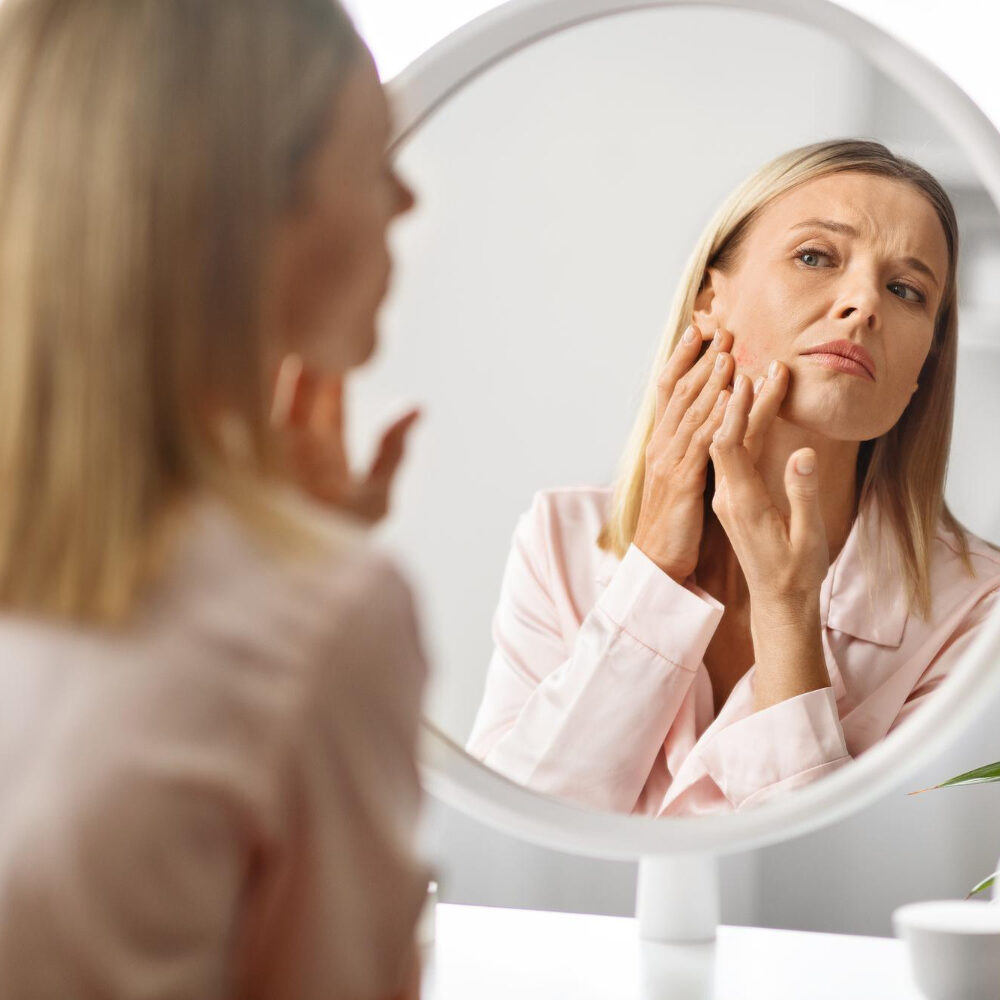
You have tried the cleansers, serums, dietary changes, and a consistent routine. You have read every article about hormonal acne and followed every piece of advice. And still, the breakouts keep coming, deep and stubborn, sitting on your chin and jawline like they own the place.
First things first: this is not your fault. And it is not a failure of willpower or skincare knowledge. For some women, persistent acne that refuses to respond to treatment is not just a skin problem, it is a signal. And understanding the difference between regular hormonal acne and PCOS-related acne could be one of the most important things you do for your skin and your overall health.
You deserve to know the difference. So let’s get into it.
What is the difference between PCOS and hormonal acne?
Both start in the same place, an excess of androgens, the hormones that tell your oil glands to produce more sebum, clog pores, and trigger breakouts. Both tend to appear on the lower face, particularly the jawline and chin. Both are frustrating, persistent, and deeply tied to what is happening inside your body rather than on the surface of your skin.
The difference comes down to pattern. Regular hormonal acne fluctuates with your menstrual cycle; it flares in the week before your period and tends to calm down afterwards. PCOS-related acne does not follow that rhythm. Because androgen levels in PCOS stay chronically elevated rather than rising and falling, the breakouts are more consistent, more severe, and far more resistant to standard skincare treatments.
Skin Insight
If your skin has a pattern, worse before your period, calmer after, that is hormonal acne. If it feels relentless with no real rhythm, that is worth looking into further.
PCOS vs Hormonal Acne
|
Hormonal Acne
|
PCOS Acne
|
|
|---|---|---|
|
Pattern |
Fluctuates with menstrual cycle |
Persistent, does not follow a cycle |
|
Severity |
Mild to moderate |
Often deeper, more cystic, more inflamed |
|
Location |
Jawline and chin |
Jawline, chin, neck, sometimes chest and back |
|
Responds to skincare? |
Usually improves with consistent treatment |
Often resistant to skincare alone |
|
Other symptoms |
Skin changes around period |
Irregular periods, hair changes, unexpected weight shifts |
|
Root cause |
Hormonal fluctuations |
Chronically elevated androgens |
Can I have PCOS without irregular periods?
Yes, and this is one of the most important things I want you to take away from this article. So many women assume PCOS must come with obvious signs like missed periods, excess facial hair, or significant weight gain. But PCOS presents differently in every single woman, and for some, stubborn acne is the only visible symptom.
This is exactly why so many cases go undiagnosed for years. A dermatologist treats the acne. A gynaecologist rules out obvious cycle issues. And nobody connects the dots. Sound familiar? It does to a lot of women, and none of them was imagining it.
Worth Knowing
PCOS affects up to 1 in 10 women of reproductive age. It is not rare, it is not unusual, and it is not something you did wrong. It is simply a hormonal pattern, and one that, once identified, can be properly supported.
Why does my acne not respond to anything I try?
This is probably the question that brought you here, and honestly, it is the most important one. Because if you have been doing everything right and your skin is still not responding, that is not a skincare failure. That is your body asking for a different kind of attention. And you are right to listen.
When acne is rooted in chronically elevated androgens, no amount of salicylic acid, niacinamide, or consistent cleansing will fully resolve it. Skincare can manage the surface, reduce inflammation, keep pores clear, fade the marks breakouts leave, but it cannot change the hormonal signal that keeps triggering new ones. The problem is not on your face. It is in your hormones.
Can I have PCOS acne if my periods are regular?
Yes, and I know how confusing that feels. Regular periods do not rule out PCOS. Some women with PCOS ovulate normally and have relatively predictable cycles while still experiencing elevated androgen levels that drive persistent acne. If your skin is telling you something is off, trust it, even if everything else seems normal. A blood test measuring testosterone and androgen markers, not just a conversation about your cycle, is the only way to know for certain.
Does PCOS acne go away on its own?
Here is the honest answer, and I want to give it to you with the encouragement it deserves. PCOS-related acne tends to persist until the underlying hormonal imbalance is addressed. Unlike regular hormonal acne, which can settle naturally as you move through your 30s, this one needs a little more support. But, and this matters, PCOS is very treatable. The acne that comes with it can be significantly improved. You are not stuck with this forever. You just need the right information and the right team in your corner.
What does PCOS acne look like?
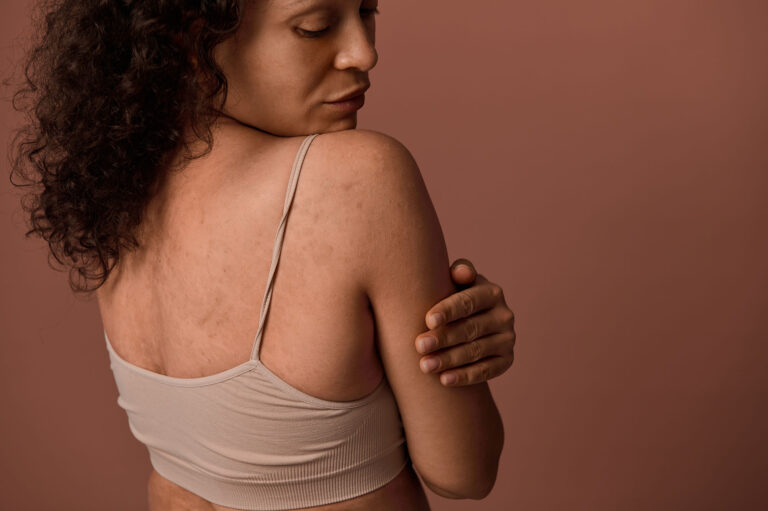
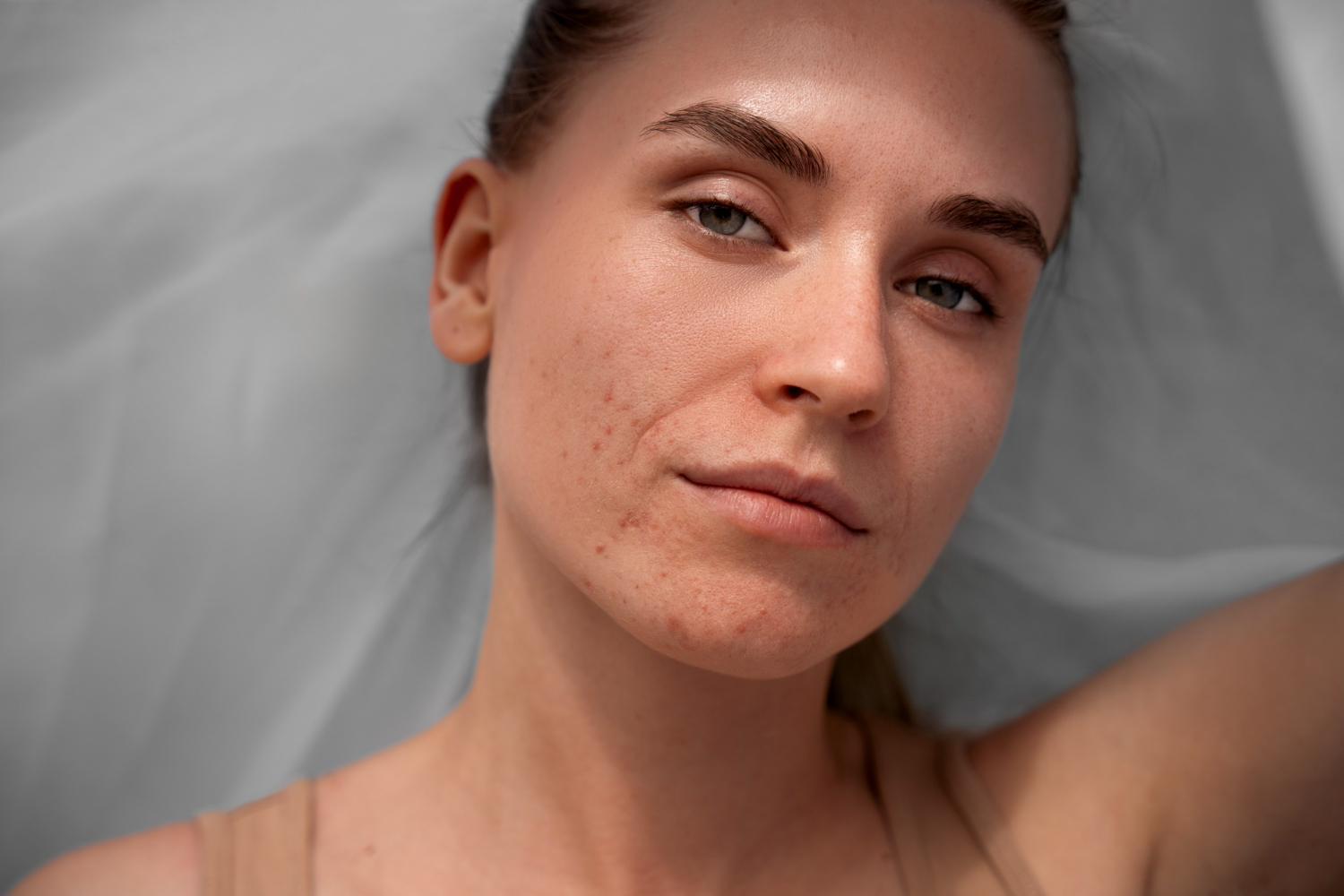
PCOS acne tends to be deeper and more inflammatory than typical hormonal breakouts. Think large, painful cysts rather than surface-level whiteheads. It clusters on the lower third of the face, jawline, chin, and sometimes the upper neck and chest, and it takes longer to heal, often leaving more significant dark marks behind.
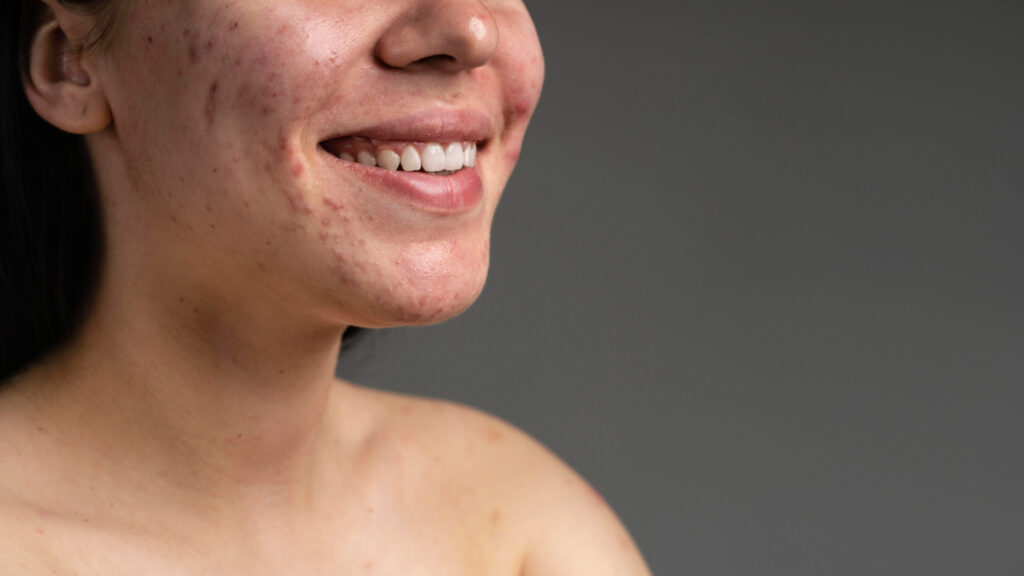
The other telltale sign is its stubbornness. As one gynaecologist put it: PCOS acne has a flat-out refusal to go away. You can take great care of your skin, and the breakouts keep coming, because the issue is not on the surface. And if you have ever felt like you were doing everything right and still losing, that is why.
What should I do if I think my acne might be PCOS-related?
Start with a conversation with your GP or gynaecologist, not just your dermatologist. Ask specifically for a hormone panel including testosterone and androgen markers, alongside a review of your full symptom picture. Acne alone is not enough to diagnose PCOS, but it is absolutely enough to warrant investigation, especially when it is persistent, deep, and resistant to treatment. Do not let anyone dismiss you. You know your skin.
In the meantime, keep your routine going. Your skincare is still doing meaningful work while you seek answers, and the next section covers exactly what to focus on.
What skincare approach works for PCOS-acne?
Skincare and PCOS acne are not an impossible combination. A consistent targeted routine makes a genuine difference, calming active breakouts, fading the marks they leave, and keeping your skin as balanced as possible while you address the hormonal picture. It is not the whole answer. But it is a meaningful, powerful part of it.
Niacinamide calms inflammation and fades the dark marks that deep breakouts leave behind. Azelaic acid targets active breakouts and the pigmentation they cause, gently and without irritation. A non-stripping cleanser used morning and evening consistently keeps congestion from building up. And mineral SPF every morning protects your skin from the UV exposure that deepens every mark hormonal acne leaves.
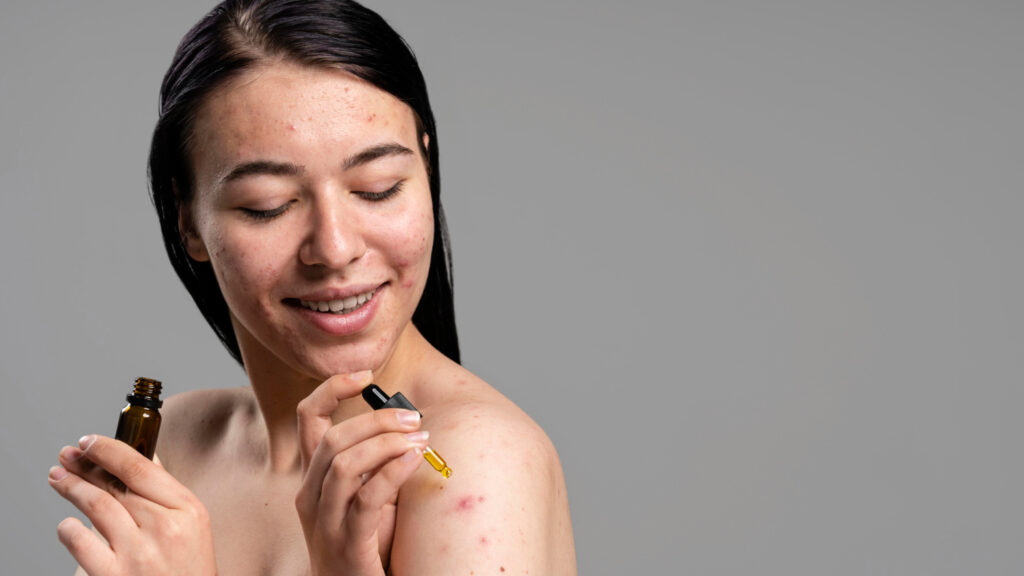
None of these will silence the hormonal conversation happening inside your body. But they will give your skin the best possible chance of showing up well while you work on the bigger picture, and that is worth a great deal.
Know Your Skin, Know Your Body
Hormonal acne and PCOS acne share a lot of the same surface signs, but understanding which one you are dealing with changes everything about how you approach it. One responds to consistent skincare and lifestyle support. The other needs a medical conversation as its starting point.
If your skin has been trying to tell you something and the usual answers have not been enough, trust it. You are not being dramatic. You are not imagining it. Your skin is often the first place your body speaks, and it is absolutely worth listening to.
You deserve clear skin. And more than that, you deserve to know why it has been this hard.
Think your acne might be hormonal rather than PCOS-related? Then you might want to read:
What Causes Hormonal Acne in your 30s?
4 INGREDIENTS THAT HELP