If you get acne after ovulation like clockwork, you are not imagining it. You had a good skin week clear, calm, almost glowing. Then something shifts and almost overnight your chin is congested, your jawline is tender, and that familiar dullness is back. You have not changed anything in your routine. You have not eaten badly or skipped sleep. It just happened.
Once you understand why acne after ovulation occurs, the whole pattern starts to make a lot more sense. And more importantly, you can actually do something about it.
Why You Get Acne After Ovulation
For the first half of your cycle, oestrogen is in charge. It keeps your skin clear, balanced, and relatively happy. Then ovulation happens and everything shifts. Oestrogen drops, progesterone takes over, and your skin starts behaving like a completely different organ. This second half of your cycle called the luteal phase is where most hormonal breakouts are born, even if they only show up on your skin days later.
According to the American Academy of Dermatology, hormonal fluctuations are one of the leading causes of adult acne in women, with the luteal phase being the most common trigger window.
Here are the five reasons why.
Reason 1: Your Skin Suddenly Produces a Lot More Oil
After ovulation, progesterone rises sharply. One of its main jobs is to stimulate your oil glands, which means your skin starts producing significantly more sebum almost immediately. More oil means shinier skin, more congested pores, and a much higher chance of breakouts forming beneath the surface.
This is not your skincare routine failing. It is your hormones doing exactly what they are designed to do. The oil surge is real, it is predictable, and once you know it is coming, you can get ahead of it.
💡 QUICK TIP
The extra oil your skin produces after ovulation is not the enemy it is what happens when that oil mixes with dead skin cells and gets trapped in your pores. Keeping pores clear before congestion builds is your best defence.
What You Can Do
- Switch to a lighter, gel-based moisturiser in the days after ovulation
- Use a salicylic acid cleanser two to three times a week to keep pores clear
- Avoid heavy or occlusive products that trap oil under the skin
- Blotting papers are your friend for midday shine without disrupting your routine
If you want to understand more about how hormones drive oil production, this guide to what causes hormonal acne in your 30s breaks it down really clearly.
Reason 2: The Hormone That Keeps Your Skin Calm Disappears
Oestrogen is essentially your skin’s best friend. It keeps inflammation low, supports collagen, helps your skin hold moisture, and generally keeps everything balanced. After ovulation, oestrogen levels drop. And when it goes, it takes a lot of that protective, calming effect with it.
The result is skin that is more reactive, more prone to redness, and less able to recover quickly from irritation. A product your skin handled fine two weeks ago might suddenly feel too strong. A breakout that would have healed quickly during the follicular phase now lingers for days.
👁️ Skin Insight
Oestrogen has a direct anti-inflammatory effect on the skin. When it drops after ovulation, even small triggers a heavy moisturiser, a slightly harsh cleanser, a stressful week can tip already-reactive skin into a full breakout. This is why acne after ovulation often feels sudden even when nothing in your routine has changed.
What You Can Do
- Pull back on strong exfoliating acids during the luteal phase
- Reach for niacinamide it calms redness and regulates oil without irritating sensitive skin. Read more about how niacinamide works on hormonal acne
- Avoid introducing new products during this phase your skin is not in the right state to test anything new
- Stick to fragrance-free, gentle formulas until oestrogen starts rising again
Reason 3: Your Pores Get Blocked Before You Even See a Breakout
Here is the part most people do not realise: the breakouts that appear on your skin right before your period did not start there. They started forming deep inside your pores during the luteal phase, sometimes up to two weeks earlier.
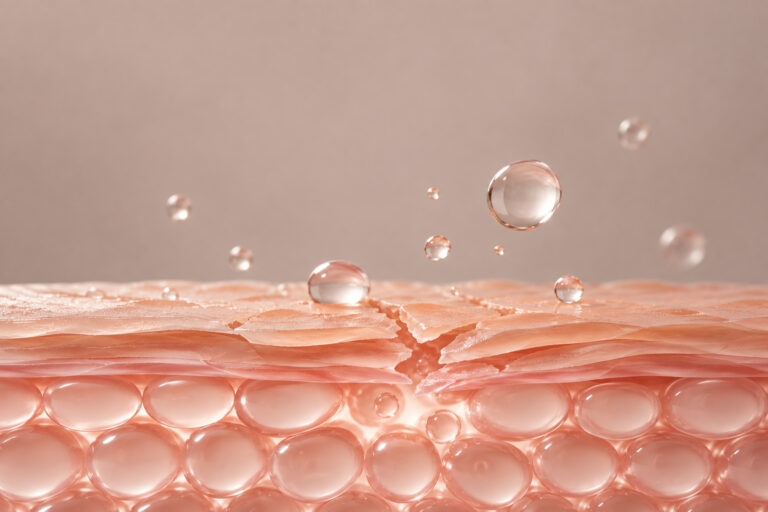
After ovulation, rising progesterone causes the skin’s outer layer to thicken slightly. Combined with the surge in oil production, this creates the perfect conditions for pores to get blocked. Dead skin cells and sebum build up inside the follicle, and a breakout begins forming long before it ever reaches the surface.
By the time you can see it, it has already been growing for days.
🧠 WORTH KNOWING
This is why spot treatments applied at the first sign of a breakout often feel too late. The real window to intervene is earlier in the luteal phase, before the congestion becomes visible. Keeping pores clear during this phase is one of the most effective things you can do to reduce acne after ovulation.
What You Can Do
- Start using azelaic acid regularly from around day 15 of your cycle it works deep in the pore and reduces inflammation before breakouts surface. Read more about it here
- Do not wait for a breakout to appear before acting the luteal phase is the time to be proactive
- Avoid touching your face during this phase, especially your chin and jawline where hormonal acne is most common
- Keep your pillowcase clean bacteria and oil transfer more easily when your skin is already congested
Reason 4: Your Skin Becomes More Sensitive and Reactive
During the luteal phase, your skin barrier becomes more vulnerable. It loses moisture more easily, reacts more strongly to products it normally tolerates, and takes longer to recover from irritation. What felt fine on your skin two weeks ago might suddenly sting, peel, or cause redness.
This catches a lot of people out. They see acne after ovulation forming and reach for stronger products more exfoliation, more actives, more aggressive spot treatments. But during the luteal phase, that approach often makes things worse. Your skin does not need more right now. It needs gentler.
What You Can Do
- Simplify your routine a gentle cleanser, a calming serum, a lighter moisturiser, and SPF is genuinely enough
- Save retinol and stronger acids for the follicular phase when your skin is most resilient
- If your skin stings or reacts to something it normally tolerates, do not push through it step back and go gentler
- A calming, fragrance-free moisturiser with ceramides helps rebuild the skin barrier during this phase
Reason 5: Your Stress Levels and Cravings Make Everything Worse
This one is not just in your head. The luteal phase comes with a natural rise in cortisol, your body’s stress hormone. And cortisol directly increases oil production and inflammation exactly what your skin does not need when it is already dealing with acne after ovulation.
At the same time, progesterone drives cravings for sugar and refined carbohydrates. Those foods spike insulin, which in turn raises androgen levels and sends your oil glands into even more overdrive. It is a cycle that feeds itself, and your skin ends up caught in the middle.
What You Can Do
- Focus on blood sugar-stabilising foods during the luteal phase protein, healthy fats, and fibre
- Magnesium-rich foods like dark chocolate, pumpkin seeds, and leafy greens can help reduce PMS-related inflammation
- Try to protect your sleep during this phase poor sleep raises cortisol, which makes everything worse
- If stress is a consistent trigger, it is worth understanding the deeper connection between your gut, your hormones, and your skin. This article on the gut-brain-skin connection explains it really well
Your Skin Is Not Failing It Is Responding
Acne after ovulation is not a sign that your routine is wrong or that you are doing something badly. It is a predictable hormonal response, and understanding it is the first step to managing it.
The luteal phase requires a different approach gentler products, lighter textures, a focus on keeping pores clear before congestion builds, and a little more grace with yourself when your skin does not cooperate.
Once you start working with your cycle instead of reacting to it, everything becomes easier to manage.
For the full picture of how each phase of your cycle affects your skin and what to do in each one, this guide to why your cycle is causing hormonal breakouts every month is the place to start.
Your skin makes sense. You just needed the right explanation.