It is hot, your face feels like it is wearing too many layers, and the sunscreen has to go on last anyway. So the thought arrives on its own: if this is going on regardless, why keep a separate moisturizer underneath it?
For some skin, that swap works beautifully. For other skin, it ends in tightness, flaking, or a fresh breakout by lunchtime. The difference comes down to two things: your skin type, and whether you are using actives like retinol or acids.
Here is how to tell which side you fall on.
Sunscreen and moisturizer solve two different problems
What a moisturizer does
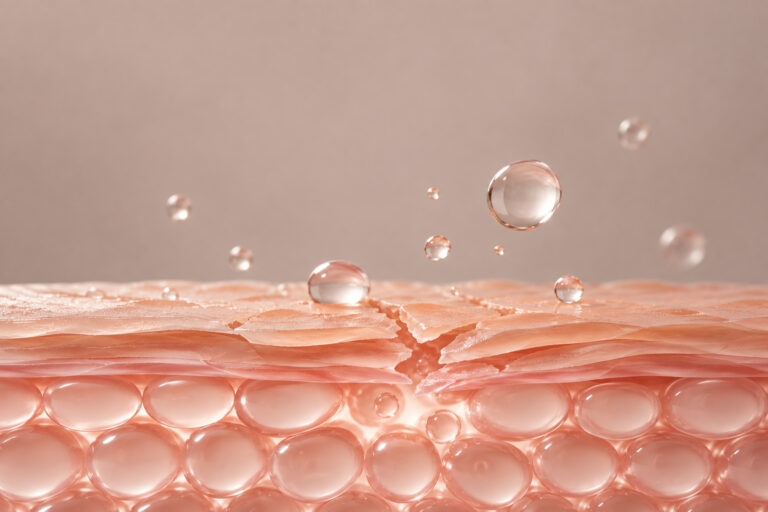
A moisturizer adds water to the skin and then stops it escaping. Humectants like hyaluronic acid and glycerin pull moisture into the skin, while richer emollients and occlusives seal it in so it cannot evaporate. Its entire purpose is keeping your barrier soft, comfortable, and working properly.
What a sunscreen does
A sunscreen protects your skin from UV, which is responsible for most visible aging and is a major trigger for dark spots and pigmentation. That protection is the point. Any hydration a sunscreen provides is a bonus that depends entirely on how it was formulated, which is the detail this whole question turns on.
So when people ask whether sunscreen can replace a moisturizer, the real question is quieter: does my sunscreen hydrate enough that I do not need the step underneath? For some formulas the answer is yes. For others it is a firm no.
The one step you never skip
Before we get to whether your moisturizer stays, let us settle the step that always stays: the sunscreen itself.
If you protect one thing in your routine, protect this. Daily SPF is the most effective anti-aging habit there is, ahead of any serum or cream. And if you are working on dark marks or post-acne pigmentation, it matters twice over, because sun exposure re-darkens those marks faster than any brightening ingredient can fade them. You can do everything else right, but skip SPF and the pigment keeps getting re-triggered.
So the real question was never “can I drop a step to save time.” It is narrower than that. The sunscreen stays. All we are deciding is whether the moisturizer stays with it.
So can sunscreen replace your moisturizer?
The swap works for some skin and backfires on other skin, and two factors decide which is yours.
Your skin type
If your skin runs oily or balanced, a hydrating sunscreen on its own is often plenty, and layering a rich cream underneath can feel heavy and clog pores. If your skin runs dry, mature, or sensitive, sunscreen alone rarely delivers the moisture your barrier needs, and skipping the cream leaves skin tight and flaky.
Your actives
This is the factor most articles skip. If you use retinol or exfoliating acids, and in your 30s you might be using them for breakouts and for early fine lines at once, your skin is often drier and more reactive than it looks. That skin usually needs its moisturizer, and dropping it invites irritation and more of the marks you are trying to fade.
Before the by-skin-type breakdown, there is one more thing that changes the answer for everyone, whatever your type: the sunscreen you actually reach for.
Which sunscreens can actually double as a moisturizer?
If you want your SPF to stand in for your moisturizer, it has to earn the job. And whether it can comes down to one thing: what is in it.
The sunscreens that can genuinely replace a moisturizer are the ones with hydration built into the formula. On the ingredient list, look for hyaluronic acid, glycerin, niacinamide, ceramides, panthenol, or squalane. Many modern sunscreens, especially newer Korean and lightweight Western formulas, are essentially moisturizers with SPF added, which is exactly why the “skip the cream” approach has become realistic at all.
That gives you a simple rule to carry into any product decision:
If your sunscreen contains those hydrating ingredients, it can stand in for your moisturizer, as long as your skin type allows it (the table below sorts that out).
If your sunscreen is missing them, if it is a light, dry-finish, or purely protective formula, put a moisturizer on first and let the sunscreen go on top. A dry sunscreen over bare skin still protects you, but it will not keep you comfortable, and by midday you will feel the difference.
So before anything else, check your bottle. The formula in your hand settles half this question before your skin type even comes into it.
Which one are you?
Have a look below to see if your skin type needs both, or can get by with just the sunscreen.
|
Your skin type |
Sunscreen instead of moisturizer? |
Why |
Your move |
|---|---|---|---|
|
Oily / acne-prone |
Often yes |
Oily skin can feel suffocated by cream under SPF, but oily does not mean hydrated, and stripping moisture can trigger more oil |
Use a hydrating, non-comedogenic SPF (with hyaluronic acid, glycerin, or niacinamide) as your all-in-one |
|
Normal / balanced |
Usually yes |
This skin is not fighting excess oil or dryness, so a hydrating sunscreen is often all it needs by day |
A hydrating SPF works as your single morning step; add a moisturizer only in colder, drier months |
|
Combination |
Depends on the zone |
A hydrating SPF handles the oily T-zone, but drier cheeks can feel tight by midday |
Hydrating SPF most days, with a little light moisturizer on the dry areas when needed |
|
Dry / mature |
Keep both |
Sunscreen alone will not replace the moisture a dry or aging barrier needs, and dryness makes fine lines look deeper |
Moisturizer first (look for ceramides and peptides), sunscreen on top |
|
Sensitive / using actives |
Keep both |
Retinol and acids leave skin drier and more reactive, so skipping moisturizer risks irritation, flaking, and more marks |
A barrier-supporting moisturizer under your SPF, every time |
Remember: the sunscreen never comes off the list. Whether it replaces your moisturizer depends on your skin type and whether you are on actives. Oily, balanced, and combination skin with a hydrating SPF can often go one step; dry, mature, sensitive, or actives-heavy skin should keep both.
Can you skip moisturizer if you use retinol?
Usually not, and this is the part that catches people out.
Retinol and exfoliating acids work by speeding up cell turnover, which is exactly why they help with breakouts, texture, and fine lines, and also exactly why they leave the barrier more fragile and prone to water loss. Skin in the middle of a retinol routine often looks fine on the surface while running dehydrated underneath.
So sunscreen alone is usually not enough hydration here, and skipping the moisturizer is where the flaking, tightness, and stinging start. On acne-prone skin, that irritation can mean more breakouts and more of the dark marks left behind. Well-hydrated skin tolerates actives better and heals with less lingering pigmentation, so the moisturizer is not the step to cut. It is closer to the step protecting all your other steps.
What about a moisturizer with SPF built in?
This is the mirror image of the whole question, and it deserves a clear answer, because a two-in-one moisturizer with SPF sounds like the tidiest solution of all. Two catches get in the way.
The SPF in these products is usually lower, and the formula is designed as a moisturizer first and a sunscreen second. On top of that, people under-apply them. Reaching the protection printed on the label takes a genuinely generous layer, and almost nobody spreads moisturizer that thickly, so you end up with a fraction of the sun protection you think you have.
An SPF moisturizer is a reasonable convenience on a low-sun, mostly-indoors day. It is not a dependable stand-in for a real sunscreen on a day you will be outside. Given the choice between “moisturizer with SPF” and “a proper hydrating sunscreen,” the dedicated sunscreen wins.
Can you use moisturizer instead of sunscreen?
This is the same question flipped around, and it comes up just as often, so it is worth answering plainly: no. A regular moisturizer, even a good one, offers no meaningful protection from UV, so it cannot take the place of sunscreen. The two are not interchangeable in that direction.
The only version that gets close is a moisturizer with SPF built in, and as covered above, those tend to carry lower protection and get under-applied, so they fall short of a dedicated sunscreen on any real-sun day. Fine as a backup, not as a replacement.
This is the one direction of the swap that never works. You can sometimes let a hydrating sunscreen cover the moisturizing, but you can never let a moisturizer cover the sun protection. When in doubt, the sunscreen is the step that stays.
So, can you simplify your routine?
For plenty of people, yes. If your skin runs oily, balanced, or combination, you are not leaning on daily actives, and your sunscreen is a hydrating one, a single well-chosen SPF can absolutely be your whole morning finish. Fewer steps, same protection, no downside.
For everyone else, dry, mature, sensitive, or deep in a retinol-and-acids routine, the simplest version of your routine still has two steps in the morning, and that is not a failure of efficiency. It is your skin telling you what it needs to stay calm and clear.
Read your bottle, find your skin type, and let those two things decide. Whatever you land on, the sunscreen goes on every single day. That part is settled.
Sunscreen and moisturizer, quick answers
Can oily skin skip moisturizer and just use sunscreen?
Often, yes, as long as the sunscreen is hydrating and non-comedogenic. Just remember that oily skin still needs water; when it is stripped, it tends to pump out more oil. A hydrating SPF gives you the moisture without the heavy feel.
What ingredients should a sunscreen have to replace a moisturizer?
Look for humectants and barrier ingredients in the formula: hyaluronic acid, glycerin, niacinamide, ceramides, panthenol, or squalane. If your sunscreen has these, it can double as your moisturizer. If it does not, apply a moisturizer first.
Is a moisturizer with SPF as good as a separate sunscreen?
Usually not. SPF moisturizers tend to offer lower protection and get under-applied, so you rarely get the number on the label. They are fine for low-sun days, but a dedicated sunscreen is the safer choice when you will actually be outside.
Can I use moisturizer instead of sunscreen?
No. A plain moisturizer does not protect against UV, so it cannot replace sunscreen. A moisturizer with SPF is the only version that offers any protection, but it usually delivers less than a dedicated sunscreen and is easy to under-apply. For real sun exposure, always use an actual sunscreen.
I use retinol. Can I skip my moisturizer in the morning?
It is not the best idea. Retinol leaves skin drier and more reactive, so most people using it need that moisturizer to keep the barrier calm. Skipping it tends to bring on flaking and irritation. Keep both steps, and always finish with SPF.
What order do moisturizer and sunscreen go in?
Moisturizer first, sunscreen last. Sunscreen is always the final step of your morning routine, sitting on top of everything else so it can do its protective job.