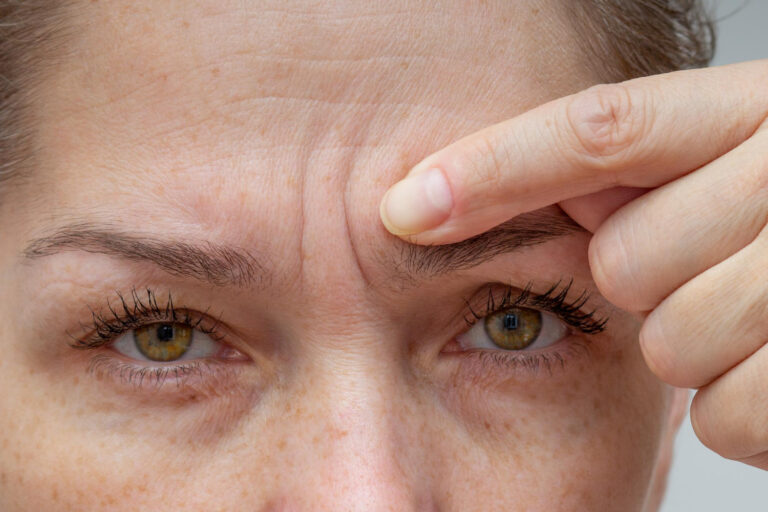
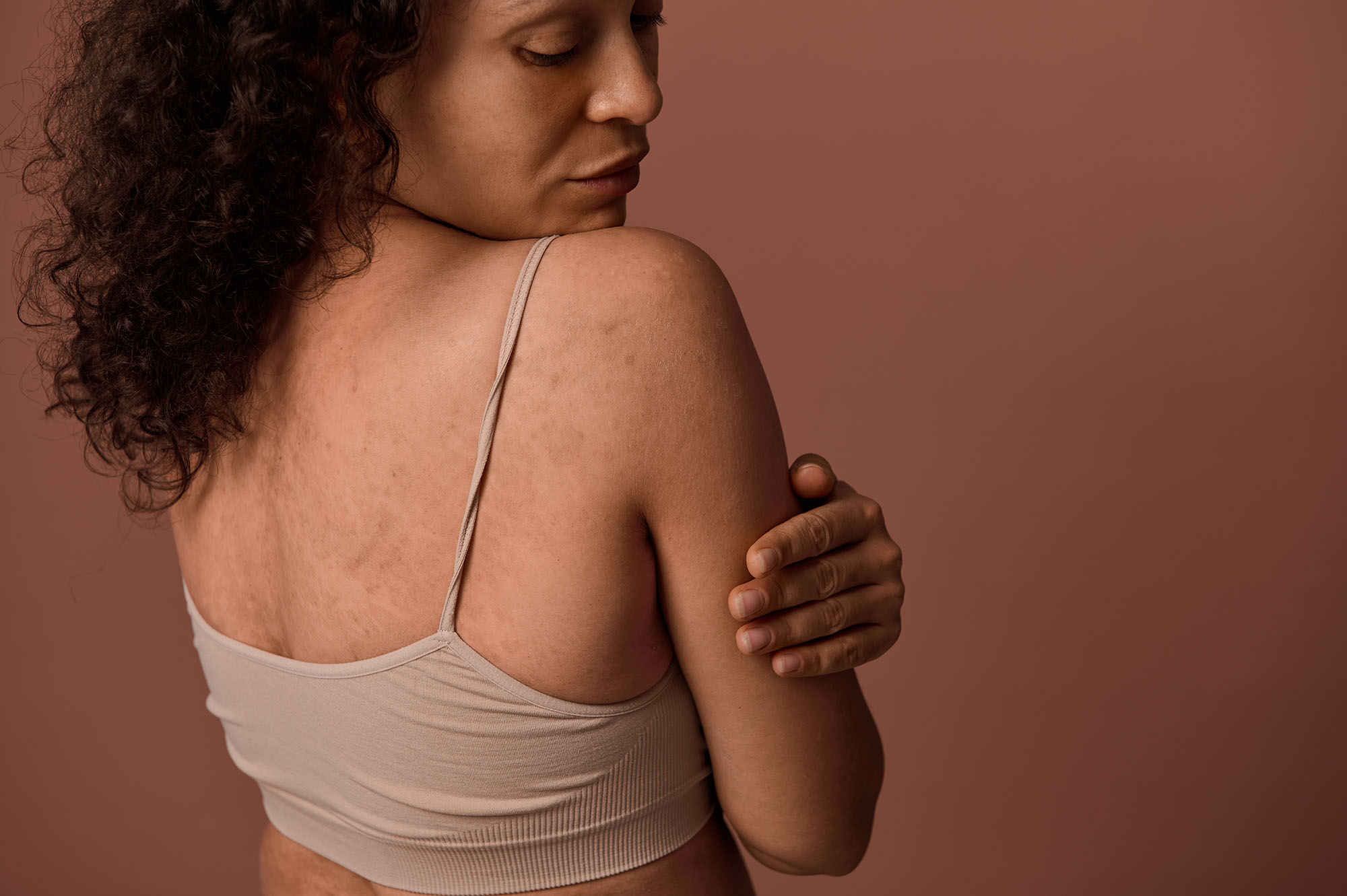
You have taken good care of your face for years. If you still get breakouts on your back and shoulders, it is not your fault. Back acne is very common. A lot of women notice it starting, or getting worse, in their late twenties and thirties, often right alongside hormonal breakouts on the jawline.
Back acne happens for the same reasons as facial acne: oil, dead skin cells, bacteria, and inflammation inside the pores. But your back adds its own challenges. The skin is thicker, has more oil glands, and spends its day under clothes that rub and trap sweat. That is why the routine that worked for your face has not touched your back.
The good news is that back acne responds well to the right care. Here is what causes it, and what you can do about it.
Best Back Acne Products (Quick View)
Best gentle daily wash
Best for stubborn breakouts
Best for hard-to-reach areas
Best for leftover dark marks
What triggers back acne?
Back acne starts the same way facial acne does. Oil and dead skin cells build up inside the follicle, bacteria multiply in that environment, and the pore becomes inflamed. What makes the back different is everything layered on top of that process.
Hormones and oil production.
Androgens drive your oil glands to produce more sebum. Your back and chest carry a dense concentration of these glands, similar to your face. So when androgen levels rise or fluctuate, those areas respond. This is why back acne so often tracks with the same hormonal patterns you see in your facial breakouts.
Sweat trapped under fabric.
Sweat itself does not cause acne. But sweat trapped against your skin under a sports bra or shirt creates a warm, occluded environment. That is exactly where clogged pores turn into inflamed ones.
Friction and pressure.
Dermatologists call this acne mechanica. Backpack straps, tight waistbands, and gym equipment are common culprits. Anything that rubs or presses repeatedly against skin can irritate follicles and trigger breakouts in that specific pattern.
Product residue.
Conditioner, hair oil and body products rinse down your back in the shower. If they are heavy or occlusive, some of that stays behind on skin that is already prone to congestion.
Thicker skin.
The skin on your torso is thicker than facial skin with a different pH, which means treatments have to work harder to penetrate. It is a real reason your usual products underperform there.
🧠 Skin Insight
You are in more company than it feels like. Research suggests roughly half of people with facial acne also have it on their trunk. Yet most treatment conversations never move below the neck.
Is it hormonal, or could it be PCOS?
Both can cause back acne. Telling them apart usually comes down to what else is happening in your body, not what the breakouts look like.
|
Type |
Hormonal back acne |
Hormonal back acne |
|---|---|---|
|
Pattern |
Flares in the second half of your cycle, calms after your period |
Persistent, less tied to a predictable cycle rhythm |
|
Lesions |
Inflamed papules, some deeper spots |
Often deeper, larger, slower to resolve |
|
Other signs |
Usually none beyond skin |
Irregular or absent periods, excess hair growth on chin, chest or back, scalp hair thinning, darkened velvety skin at neck or underarms |
|
Response to skincare |
Improves steadily with a consistent routine |
Improves, but often plateaus without addressing the underlying hormones |
That right-hand column might describe you, especially if irregular cycles come with acne that never fully clears. If so, it is worth raising with a doctor rather than adding another product. PCOS is driven by elevated androgens and is frequently linked to insulin resistance. Treating it properly means treating the hormones, not just the skin. If you want the full picture, I explain the difference in Is It PCOS or Hormonal Acne?
One more thing worth ruling out. If your back is covered in small, identical, itchy bumps, that may not be acne at all. Especially if they refuse to respond to acne treatments. Malassezia folliculitis, commonly called fungal acne, is a yeast overgrowth in the follicle. It has no blackheads or whiteheads, and it needs an antifungal rather than an acne product. Persistent monotonous bumps that ignore everything you throw at them are the classic clue.
What actually clears back acne?
Three ingredients have real evidence behind them for body acne, and each does something slightly different.
Salicylic acid is oil-soluble, so it gets inside the pore and clears out the buildup. It is the best everyday maintenance ingredient and the gentlest of the three.
Benzoyl peroxide kills acne-causing bacteria directly and reduces inflammation. It is the strongest option for genuinely inflamed, stubborn breakouts. It also bleaches fabric, so use white towels and let it dry fully before dressing.
Glycolic acid works on the surface, clearing dead skin and fading the dark marks breakouts leave behind. It is what you reach for after the active breakouts have calmed.
This part includes affiliate links. Any purchase you make supports this blog at no additional cost to you. Learn more here
The Best Back Acne Products to Try
These are the four products worth knowing about, each solving a different piece of the puzzle.
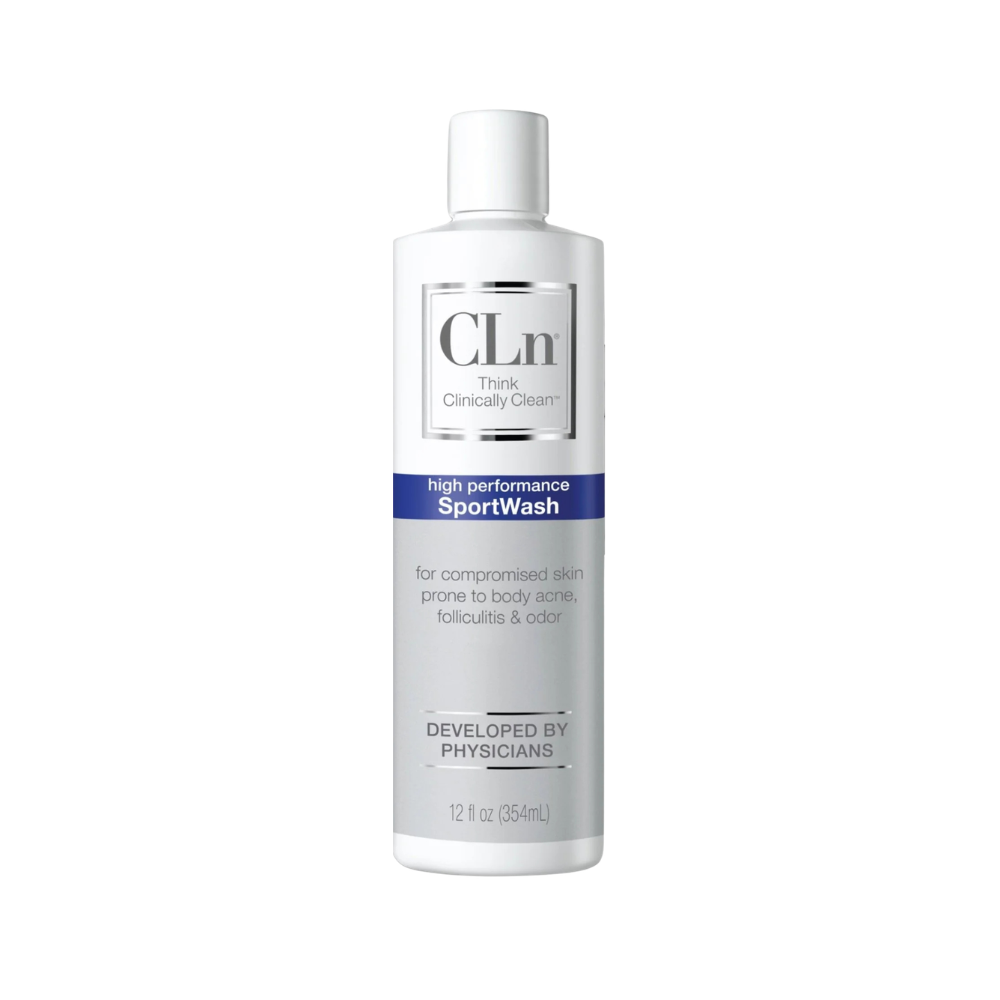
CLn SportWash
Best For: Recurring Breakouts, Folliculitis Key Ingredients: Sodium Hypochlorite
This is the one I would start with if your back acne is mild to moderate. It works differently from every other wash in this lineup. It was physician-developed, and it is the closest thing to a diluted bleach bath you can buy in bottle form. Dermatologists have recommended this approach for decades for body acne and folliculitis. This version is just formulated to be gentle enough for daily use. It does not exfoliate the way an acid wash does. Instead, it reduces the bacteria and yeast on the skin’s surface that keep triggering new breakouts. That makes it genuinely useful if you have tried acid washes without much change.
💜 What I love:
It solves the problem from a different angle entirely, and the reviews reflect it. It holds a 4.8 star average, and most reviewers give it a full five stars for clearing recurring body breakouts.
🧬 Worth knowing:
It is the most expensive wash here and it will not exfoliate or fade dark marks on its own. Pair it with the Replenix lotion below once active breakouts calm down.
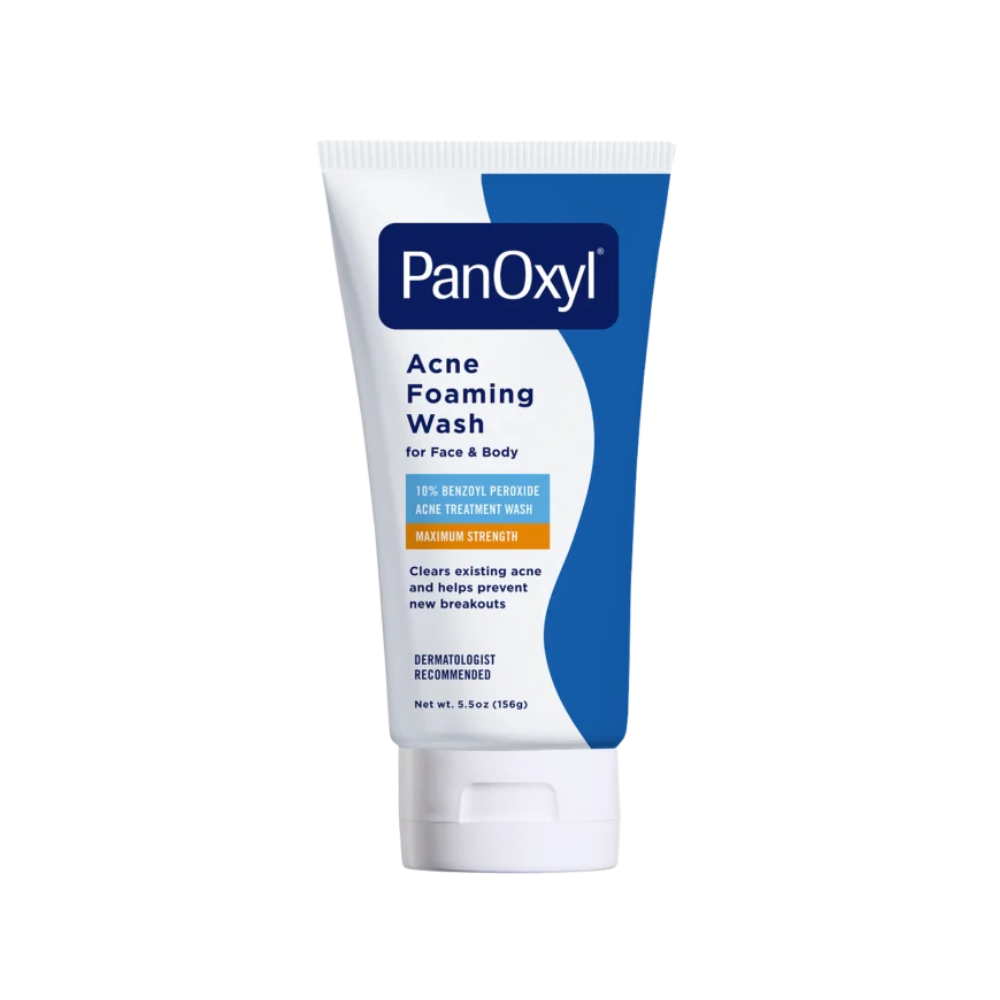
PanOxyl Acne Foaming Wash, 10% Benzoyl Peroxide
Best For: Stubborn, Inflamed Breakouts Key Ingredients: Benzoyl Peroxide
When breakouts are actively inflamed and nothing gentler is touching them, this is the workhorse. Ten percent is the maximum over-the-counter strength, and for thicker back skin that strength is genuinely useful rather than overkill. Dermatologists recommend leaving benzoyl peroxide cleansers on the skin for two to five minutes before rinsing. That matters more on your back than anywhere else, because the skin there is denser and needs the contact time.
💜 What I love:
It has no interest in looking pretty on your shelf. It is a plain drugstore bottle that costs less than a coffee but quietly outperforms products ten times its price. That is its own kind of elegance.
🧬 Worth knowing:
It bleaches fabric, so white towels only, and it can be drying. If your skin is sensitive, start with two or three times a week rather than daily. Or try the 4% version instead.
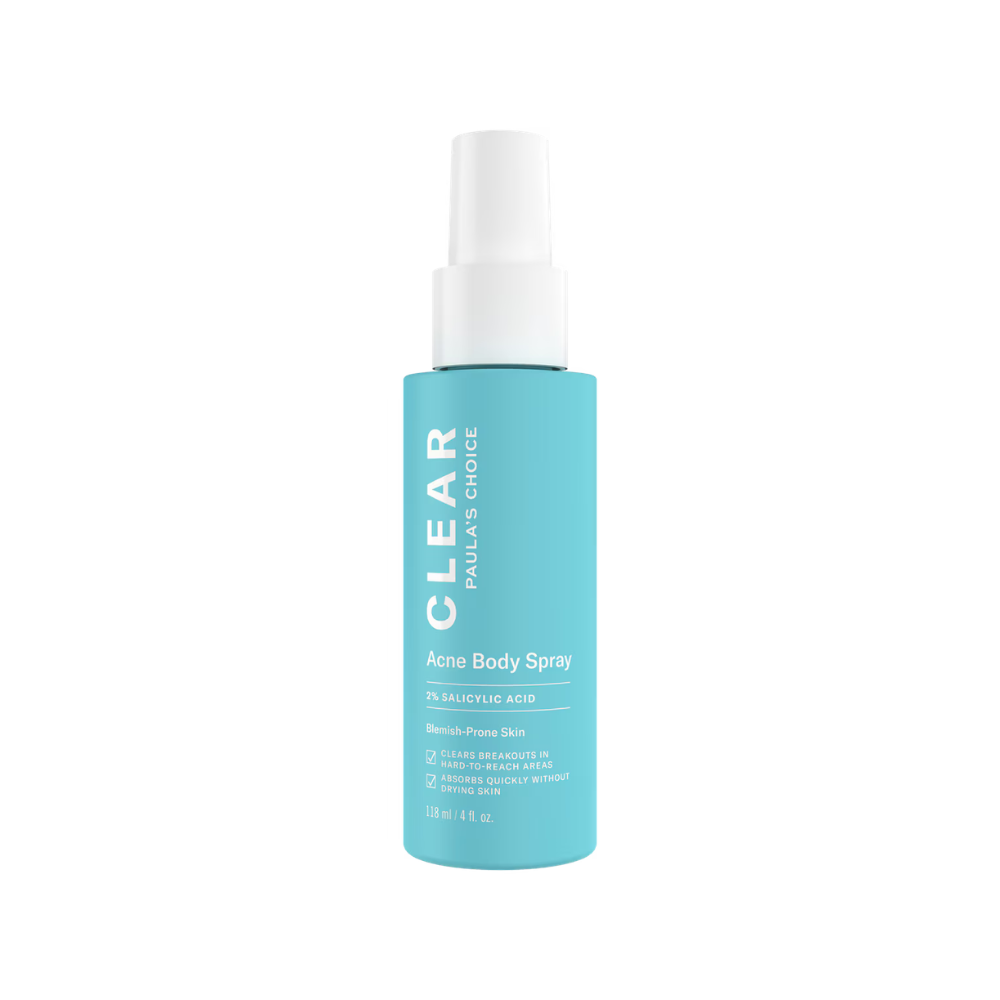
Paula’s Choice CLEAR Back and Body Acne Spray
Best For: Hard-to-Reach Areas Key Ingredients: 2% Salicylic Acid
The practical problem with back acne is that the worst of it usually sits where your hands cannot comfortably reach. This is a leave-on 2% salicylic acid treatment in a spray that works upside down. That means you can actually apply it properly between your shoulder blades. It is alcohol-free and fragrance-free, which matters for a product staying on your skin all day.
💜 What I love:
It solves the single most frustrating thing about treating your own back, and it does it without a fight.
🧬 Worth knowing:
It is the most expensive option here. If your breakouts are concentrated somewhere you can reach, a wash may be all you need.
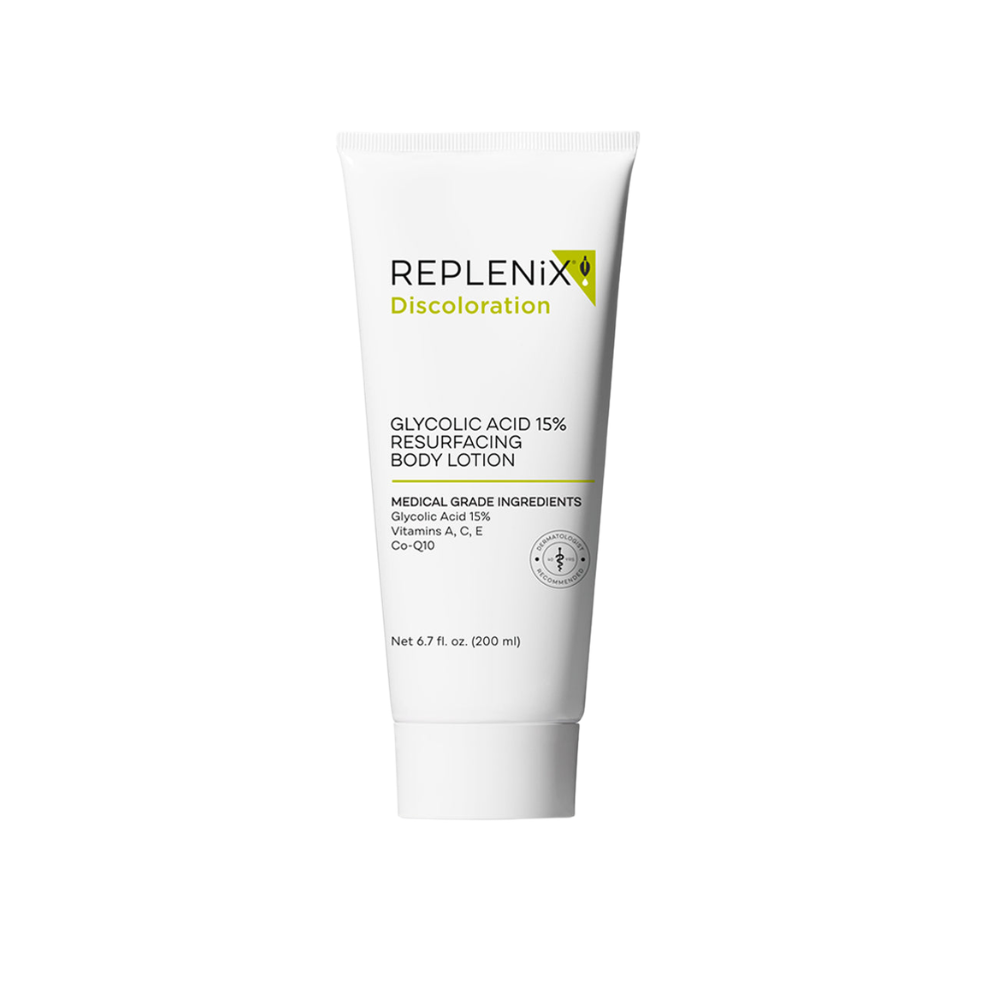
Replenix Glycolic Acid 15% Resurfacing Body Lotion
Best For: Leftover Dark Marks Key Ingredients: 15% Glycolic Acid, Green Tea, Vitamin C
Back acne has a habit of leaving a constellation of dark marks long after the spots themselves have gone. This is what I would use for that stage, and it is a genuine step up from drugstore glycolic lotions. Replenix is a medical-grade brand sold through dermatology offices. This formula pairs 15% glycolic acid, well above the 10% you find in most body lotions. It also includes an antioxidant lineup of green tea, vitamin C, and CoQ10 to support the skin while it resurfaces. That extra strength is what makes the difference here. Truncal skin is thicker and more resistant to treatment than facial skin.
💜 What I love:
The concentration actually does something. People who have tried gentler glycolic lotions and seen little change often notice this one working within a few weeks.
🧬 Worth knowing:
The strength means some initial tingling is normal on freshly broken-out skin. Do not layer it with benzoyl peroxide in the same session. Wear sunscreen on exposed skin while you are using it. Glycolic acid increases sun sensitivity.
Does showering right after sweating actually matter?
Yes, and it is probably the highest-impact habit on this list. Sweat sitting against your skin under fabric creates the trapped, occluded conditions where clogged pores become inflamed ones. Changing out of damp workout clothes and rinsing off soon after you sweat directly interrupts that.
If you cannot shower immediately, at minimum change out of the wet clothes. Sitting in a damp sports bra through a commute home undoes much of what a good body wash is doing.
What should I wear to avoid back breakouts?
Loose, breathable fabrics, and change them once they are damp. Tight synthetic fabrics hold sweat against your skin and add friction, which is the acne mechanica problem in one garment.
Two more things that matter more than people expect. Wash your sheets weekly if you sleep on your back. And always reach for a clean, dry towel rather than the one hanging damp since yesterday.
Does diet affect back acne?
Possibly, though less dramatically than the internet suggests. The clearest evidence points toward high-glycemic foods and, for some people, dairy. What matters more for hormonal acne specifically is blood sugar stability, which is closely tied to insulin resistance. That is the same mechanism at work in PCOS-related acne.
This is worth exploring if you have other signs of hormonal imbalance. But it is not where I would start if your back acne is mild. Get the topical routine consistent first. I go deeper into the mechanism in The Gut-Brain-Skin Connection.
💡 The Key to Clearer Back Skin
Consistency beats intensity every time. A gentle wash used daily for eight weeks will do more than a maximum-strength treatment. Especially one you abandon after ten days because it dried you out.
How long does it take back acne to clear?
Give any new routine at least six to eight weeks before you judge it. Back skin is thicker and slower to respond than facial skin. You will usually notice fewer new breakouts before you notice the existing ones fading.
The thing to resist is switching products every two weeks because nothing has happened yet. That is the single most common reason people conclude nothing works for them.
Will back acne leave scars?
It can, particularly with deeper inflamed spots. The risk is also higher on the back than the face. Lesions there tend to be larger and slower to resolve. Dermatologists consistently emphasise treating back acne while it is still mild, before it becomes severe enough to scar.
Most of what looks like scarring in the early stages is actually post-inflammatory hyperpigmentation, the flat dark marks left behind. Those fade with time and respond well to glycolic acid. Raised or indented scarring is a different situation and worth seeing a dermatologist about.
And please, do not pick. It is the fastest route from a mark that would have faded to one that will not.
Beyond the Face
Hormonal acne has never respected the boundary at your jawline, and there is no reason your routine should either. The skin on your back is thicker, more crowded with oil glands, and spends its life under fabric. It needs its own approach, not the leftovers of your facial routine.
Start with one wash, use it consistently, add a leave-on treatment for hard-to-reach areas, and give it two months. That is genuinely most of it.