
Good news: retinol can be a particularly useful ingredient for oily, acne-prone skin. It can help keep pores clear, reduce breakouts, and support smoother, more even-looking skin over time.
But there’s a catch: when you first introduce retinol, your skin may become irritated, tight, flaky, or more sensitive than usual. You may even notice a temporary increase in breakouts as your skin adjusts. The key is to start slowly and give your skin time to adapt.
Let’s go through exactly how to start retinol for oily, acne-prone skin, what to use with it, what to avoid, and which formulas are worth considering.
Best Retinol for Oily & Acne-Prone Skin (Quick View)
BEST FOR FIRST-TIME RETINOL USERS
BEST FOR POST-ACNE MARKS
BEST FOR FINE LINES & WRINKLES
Why Retinol Is So Good for Oily, Acne-Prone Skin
Oily, acne-prone skin actually has a lot to gain from retinol. When oil and dead skin cells build up inside your pores, they can contribute to clogged pores and breakouts. Retinoids help normalize the way skin cells shed inside the follicle, which can help prevent pores from becoming clogged.
And retinol isn’t only interesting for breakouts.
It can also improve the appearance of uneven texture, pigmentation and post-acne marks, while supporting smoother, firmer-looking skin over time. That’s what makes it particularly useful if you’re dealing with acne now but are also starting to think about fine lines and skin longevity.
Clearer-looking pores, smoother texture, more even-looking skin and long-term anti-aging benefits. It’s one of those rare ingredients that can make sense at several different stages of your skincare journey.
What Happens When You First Start Retinol?
When you first introduce retinol, your skin may become dry, flaky, tight or more sensitive. Some people also notice more breakouts during the adjustment period, but the idea of a guaranteed “retinol purge” is more complicated than skincare content often makes it sound.
Retinoids are used to treat acne, so we shouldn’t automatically assume that every breakout after starting retinol is a purge or a sign that the product is “working.” As dermatologists point out, a purge is different from a reaction, and it may simply be irritation, especially if you’ve introduced it too frequently or combined it with too many other actives.
So if your skin suddenly becomes angry after starting retinol, don’t automatically decide that you need to push through it.
Sometimes the better move is simply to slow down.
How to Start Retinol Without Wrecking Your Skin Barrier
Use retinol at night. Start by applying a small amount to completely dry skin after cleansing. You only need enough to lightly cover the face. Using more won’t make it work faster, but it can make irritation more likely.
If you’re new to retinol or your skin is easily irritated, apply a thin layer of moisturizer first. Let it settle, then apply your retinol and finish with another layer of moisturizer. Known as the moisturizer sandwich method, this can help make the adjustment period more comfortable.
Begin with two nights a week and give your skin time to adjust. Once you’re comfortable with that frequency and aren’t experiencing significant dryness, burning, or irritation, you can gradually increase to three nights a week, then every other night if needed.
You don’t have to work your way up to nightly use. The best routine is one your skin can comfortably maintain, whether that’s two nights a week or every other night.
During the day, protect your skin with a broad-spectrum SPF. UV exposure contributes to pigmentation and collagen breakdown, so daily sunscreen is an important part of any retinol routine, especially when your goal is healthier, younger-looking skin.
What to Use With Retinol for Oily Skin
You really don’t need a complicated routine around retinol. In fact, when you’re starting out, boring is good.
What should you use with retinol?
- A gentle cleanser
- A moisturizer your skin already likes
- Broad-spectrum SPF 50 every morning
What should you avoid on retinol nights?
When you’re starting out, I’d avoid using strong exfoliating acids such as glycolic acid or salicylic acid on the same night. This doesn’t mean you can never use them together. It simply gives your skin a chance to adjust to one active at a time. Once your skin is comfortable with retinol, you can decide whether your routine actually benefits from adding exfoliation back in.
Top 3 Retinol Serums for Oily & Acne-Prone Skin
Not every retinol serum is a great match for oily, breakout-prone skin. For this list, I looked for formulas that make sense for both sides of the equation: the acne and oiliness you’re dealing with now, and the fine lines, pigmentation and skin longevity concerns that may become more important with time.
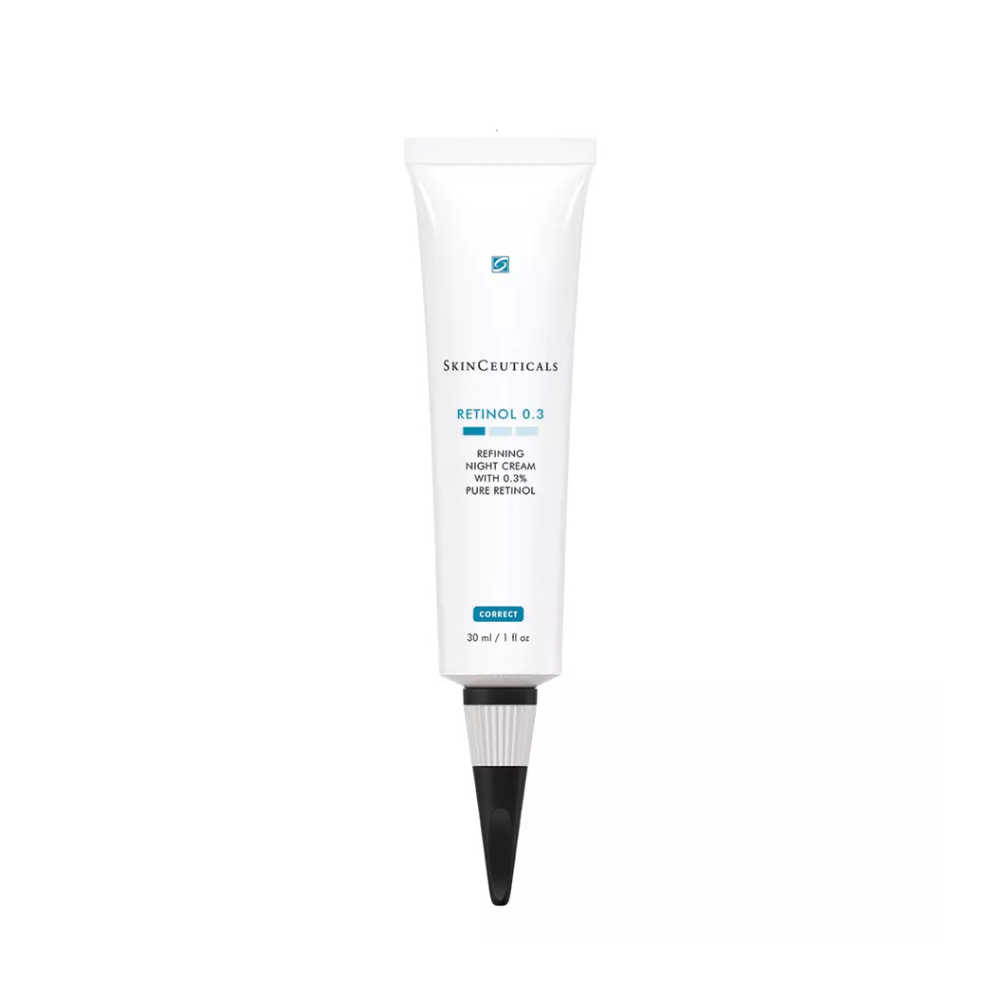
1. SkinCeuticals Retinol 0.3
Best for
Key InGREDIENTS
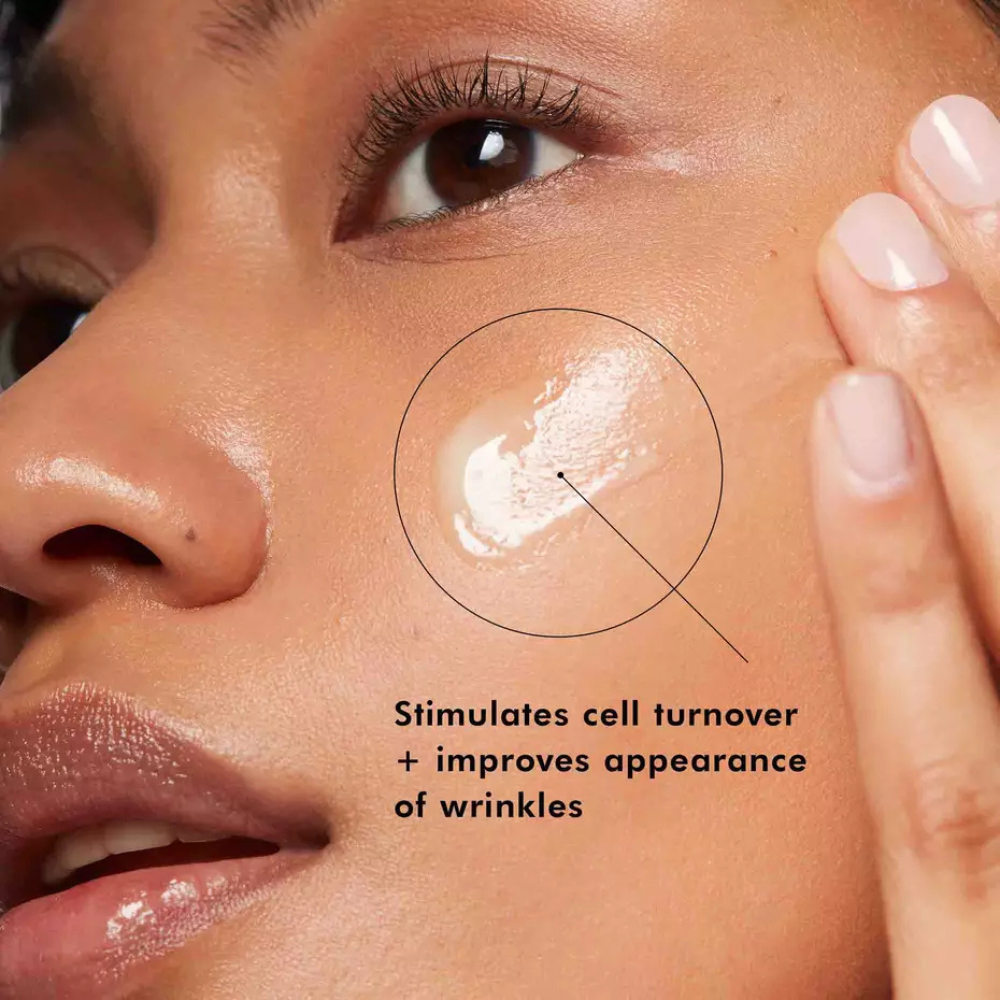
SkinCeuticals’ Retinol 0.3 is a good starting point if you want a more clinical, straightforward retinol formula. The 0.3% strength gives you a relatively conservative entry point, while the formula is designed around stabilized, controlled-release retinol to help improve the appearance of fine lines, texture, pores and discoloration.
It’s particularly relevant for this audience because the formula is positioned for oily, combination and blemish-prone skin, as well as early signs of aging. It’s also non-comedogenic and fragrance-free. The range also gives you somewhere to go later, with 0.5% and 1% strengths available once your skin has built up tolerance.
💜 What I love:
It feels like a very sensible starting point when you want a serious retinol from a clinical skincare brand without jumping straight into a high-strength formula.
🧬 Worth knowing:
0.3% may look modest on paper, but that doesn’t mean you should rush to use it every night. Your skin still needs time to build tolerance.
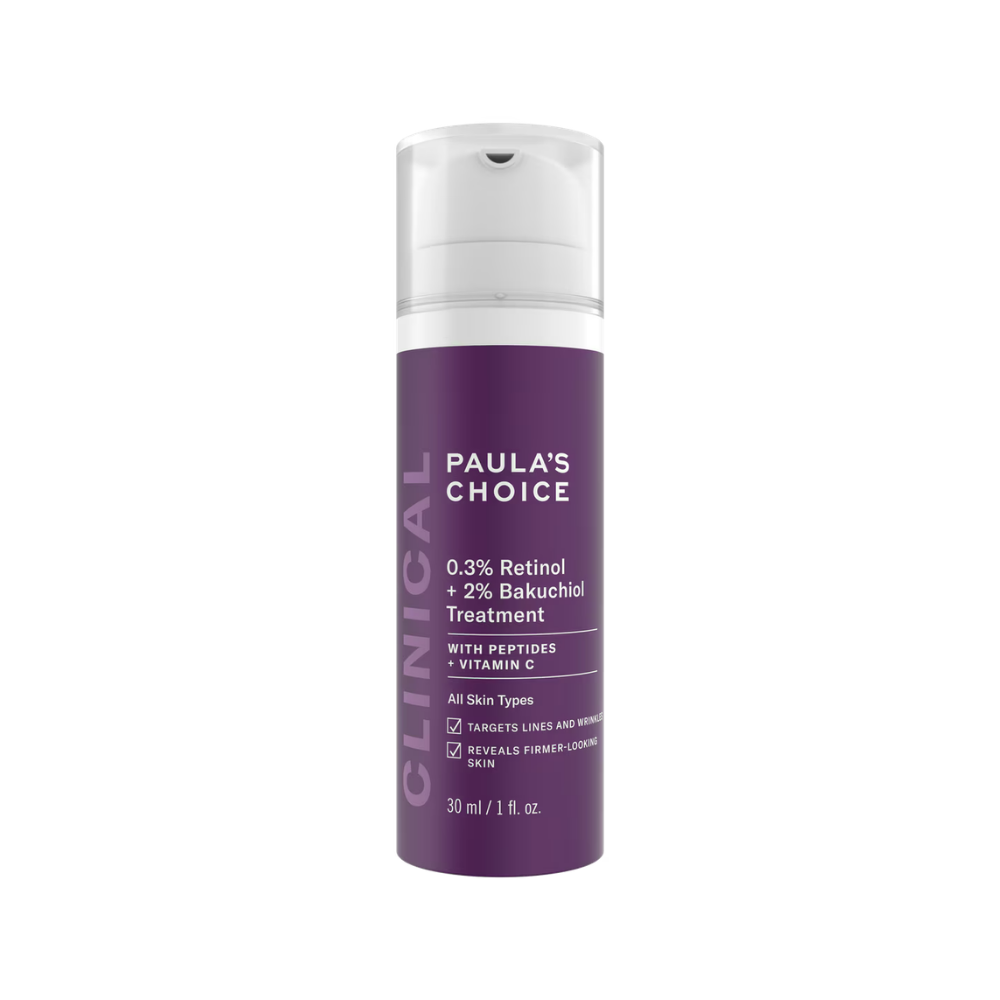
2. Paula’s Choice Retinol, 0.3% to 1%
Best for
Key InGREDIENTS
This is the retinol range I use myself, and I deliberately started with the lower-strength formula.
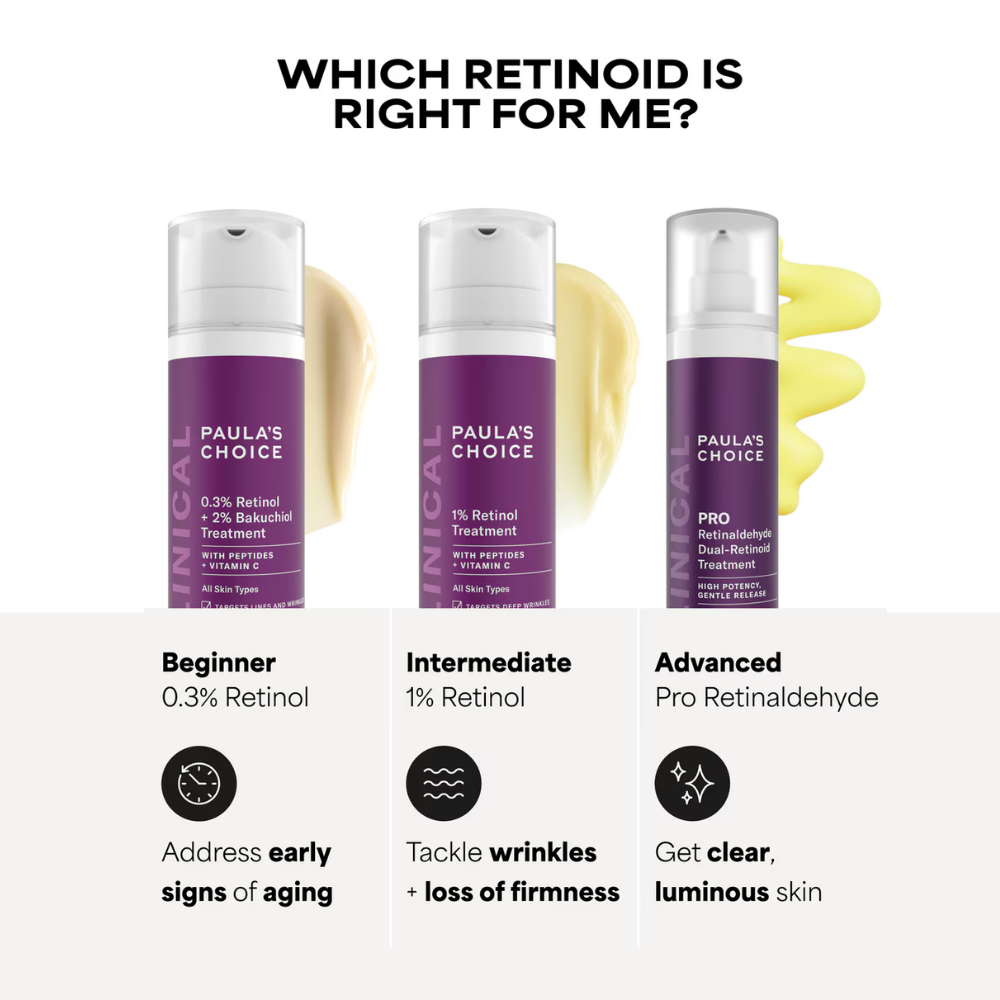
I began with the CLINICAL 0.3% Retinol + 2% Bakuchiol Treatment because I wanted to see how my skin would respond before introducing a stronger retinol. The formula combines 0.3% retinol with bakuchiol and peptides, and Paula’s Choice recommends starting at three evenings per week before gradually increasing frequency as your skin tolerates it.
It worked well for me, and once I knew my skin was comfortable with retinol, I eventually moved up to the 1% Retinol Treatment. That progression made sense for me because I wanted a stronger retinol, but you don’t have to follow the same path. If your skin is doing well at 0.3% and you’re happy with your results, there’s no requirement to move higher.
💜 What I love:
I like that this gives you room to build your retinol routine around your skin rather than choosing one strength and committing to it from day one. Starting lower allowed me to see how my skin responded before deciding whether I wanted more.
🧬 Worth knowing:
Don’t move up to 1% simply because you’ve been using 0.3% for a certain number of weeks or months. If your skin is comfortable and you’re getting the results you want, staying at 0.3% is completely reasonable. Consider moving up when you want a stronger formula and your skin is consistently tolerating your current strength.
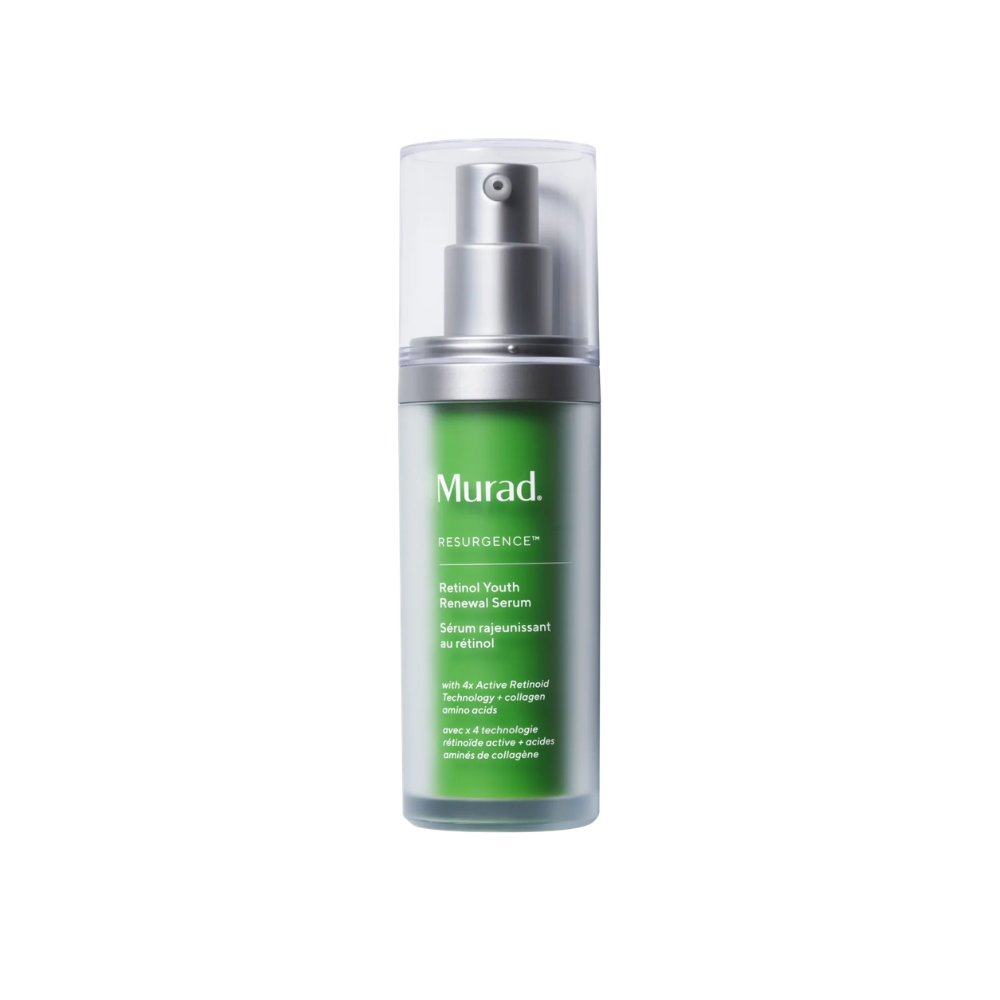
3. Murad Retinol Youth Renewal Serum
Best for
Key InGREDIENTS
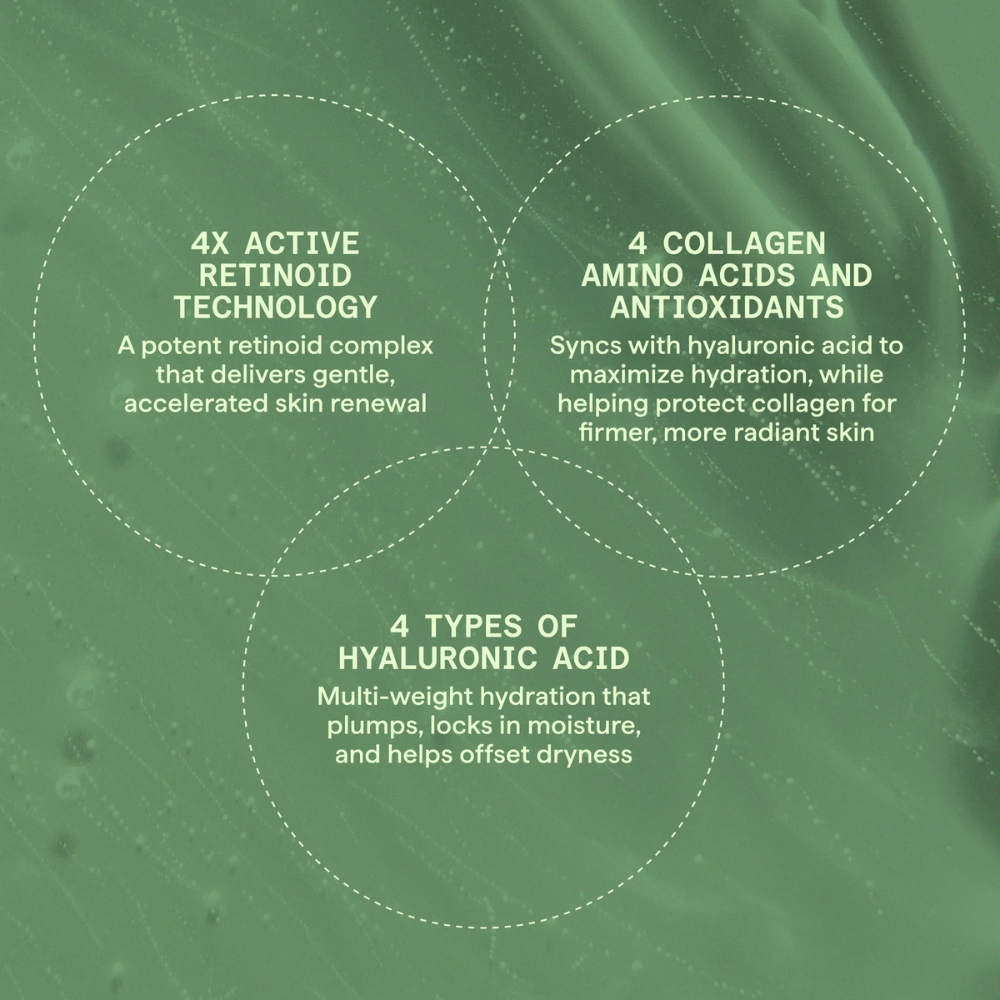
Murad takes a different approach with its Retinol Youth Renewal Serum. Rather than relying on one retinol format, its Retinol Tri-Active Technology combines a fast-acting retinoid, delayed-release retinol and a retinol booster, alongside hydrating ingredients such as hyaluronic acid.
The formula is designed primarily around visible signs of aging, including lines, wrinkles, firmness and texture, but Murad lists oily and combination skin among the skin types it is suitable for. That makes it an interesting choice if anti-aging is your main priority but you don’t want to automatically rule out a retinol serum just because your skin is oily.
💜 What I love:
It takes a more sophisticated approach to retinol delivery rather than simply increasing the percentage. The combination of different retinol technologies makes this one particularly interesting for someone who wants anti-aging results but is also conscious of irritation.
🧬 Worth knowing:
Unlike the other three options in this list, this formula contains fragrance. If your skin is easily irritated by fragranced skincare, I’d choose one of the other options instead.
Not Sure Which Retinol Strength Is Right for You?
Start lower than you think you need. A retinol you can use consistently will take you much further than a stronger formula that leaves your skin irritated every few nights.
If you’re new to retinol, 0.3% is a perfectly respectable place to start. Once your skin has adjusted, you can decide whether you actually want to increase the strength.
And remember: stronger isn’t automatically better. The best retinol for you is the one that gives you results while still allowing you to keep using it consistently.
More information on choosing between retinol, retinal and tretinoin:
Retinol vs. Retinal vs. Tretinoin: Which One Is Right for Your Skin?
More information on using retinol during the summer months:
Can I Use Retinol in Summer If I Have Hormonal Acne?
Retinol for Acne and Oily Skin: Your Questions Answered
How Long Does Retinol Take to Work for Acne?
Retinol is a long-game ingredient, so don’t judge your results after a couple of applications. You may notice changes in oiliness, clogged pores and texture over the first several weeks, but acne and post-acne marks can take longer to improve. Fine lines, pigmentation and other signs of aging also require consistent use over time.
The important part is consistency. Using retinol aggressively for two weeks and then stopping because your skin is irritated is much less useful than finding a routine you can actually maintain.
Can I Use Retinol Every Night?
Eventually, you may be able to use retinol every night, but you absolutely do not need to start there. For beginners, around two nights a week is a reasonable starting point. Once your skin is comfortable, you can gradually increase to three nights, every other night, and eventually nightly if your skin tolerates it.
And remember: More frequent does not automatically mean better. If your skin is happy and your routine is giving you results at three nights a week, there is no reason to force yourself into nightly use.
Will Retinol Make My Oily Skin Worse at First?
It can make your skin feel worse temporarily, particularly if you introduce it too quickly.
Dryness, flaking, tightness, redness and irritation are all possible when starting retinol. You may also notice some breakouts, but don’t automatically assume that every breakout is a “purge.”
If your skin becomes very irritated, burning or persistently uncomfortable, reduce the frequency rather than trying to push through it. And yes, even oily skin needs moisturizer when you’re using retinol.
Keeping your skin adequately moisturized can make retinoid treatments easier to tolerate and helps support the skin barrier while your skin adjusts. Your moisturizer doesn’t need to be heavy, either. Look for a lightweight, non-comedogenic formula that feels comfortable on your skin.
What Should I Do If Retinol Is Irritating My Skin?
First, don’t panic and don’t try to fix irritation by adding five more products. Reduce your retinol frequency or pause it temporarily if your skin is particularly uncomfortable. Keep your routine simple with a gentle cleanser, moisturizer and sunscreen until your skin settles.
Once your skin feels normal again, restart at a lower frequency.Retinol should be something you gradually build into your routine, not something you have to survive.